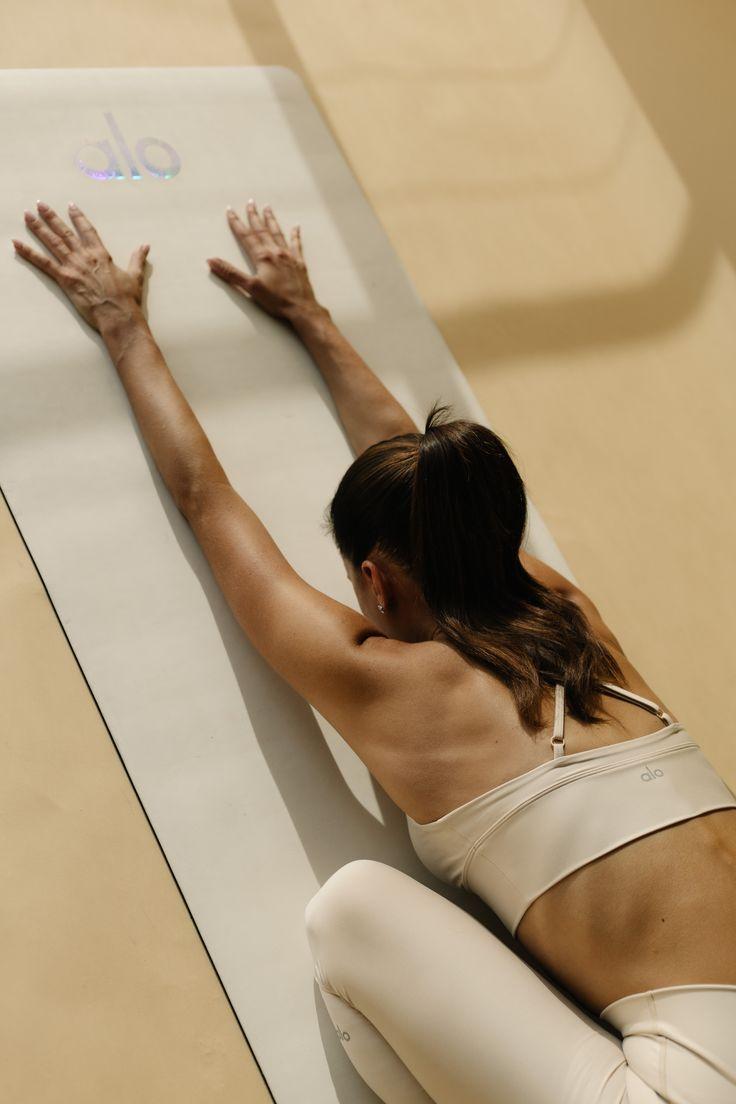
Matsya Kridasana — Flapping Fish Pose
Matsya Kridasana is a prone relaxation pose in which one leg is bent to the side while the arms support the head. The asymmetrical position creates a gentle stretch through the hip, lower back, and side body — resembling the movement of a fish flapping in water. This pose is often used to release tension after long periods of sitting or at the end of a yoga practice.
Quick Overview
Matsya Kridasana is a gentle asymmetrical relaxation pose that targets the hips, glutes, and lower back. One leg remains extended while the other bends outward to the side, creating a lateral stretch through the hip and lower spine. The arms are crossed under the forehead for support, allowing the neck and shoulders to relax. This pose is particularly effective for releasing tension accumulated from prolonged sitting or standing.
Benefits of Matsya Kridasana
Releases Hip Tension
The bent-leg position creates a gentle external rotation stretch in the hip joint, releasing tightness in the glutes and piriformis.
Alleviates Lower Back Discomfort
The asymmetrical position gently stretches the lumbar muscles on the side of the bent leg, helping to relieve lower back tension.
Stretches the Side Body
The lateral tilt created by the bent leg lengthens the muscles along the side of the torso, including the obliques and quadratus lumborum.
Calms the Mind
The supported prone position has a grounding effect that can help settle mental agitation and promote relaxation.
Improves Hip Mobility
Regular practice of this pose maintains healthy range of motion in the hip joints, particularly external rotation.
Body Focus
Gently stretches the external rotators and gluteal muscles of the bent leg
Lengthens the lumbar muscles on the side of the bent leg
Stretches the lateral muscles of the torso on the bent-leg side
Supported by the forearms, allowing the upper body to relax completely
Gently mobilizes the sacroiliac joint through the asymmetrical position
Who Should Practice Matsya Kridasana
Those with Tight Hips
The gentle external rotation stretch makes this pose ideal for anyone experiencing hip tightness from sitting or physical activity.
Yoga Students Seeking Lower Back Relief
The asymmetrical stretch targets the lumbar muscles in a way that symmetrical poses cannot.
Office Workers
This pose counteracts the effects of prolonged sitting by opening the hips and releasing the lower back.
Practitioners Before Savasana
Matsya Kridasana can be used as a preparatory pose to release residual tension before final relaxation.
Who Should Avoid Matsya Kridasana
The external rotation of the bent leg may aggravate certain hip conditions such as labral tears or severe bursitis.
The stretch through the inner thigh of the bent leg may strain the adductor muscles if they are already injured.
Lying face down is not suitable during pregnancy. Practice side-lying hip stretches instead.
Preparation Tips
Place a folded blanket under the hips for comfort, especially if you have prominent hip bones
Use a small cushion under the forehead if the crossed-arms position feels too high
Practice on both sides for equal time to maintain balance
Wear loose clothing that allows the bent leg to move freely without restriction
Step-by-Step Instructions
Begin in a prone position
Lie face down on the mat with both legs extended straight behind you. Rest the forehead on the floor or on crossed forearms.
Bend one knee outward
Bring the right knee forward and out to the side, bending it at approximately 90 degrees. The right thigh should form a right angle with the torso.
Adjust the foot position
The right foot can rest near the left knee or further up the left thigh, depending on comfort. The knee should rest comfortably on the floor.
Cross the forearms under the forehead
Stack the forearms and rest the forehead gently on them. Adjust to keep the neck in a neutral, comfortable position.
Relax into the position
Allow the weight of the body to sink toward the floor. Consciously release tension in the hips, lower back, and shoulders.
Breathe and hold
Stay for 1–3 minutes, breathing naturally. Notice the gentle stretch through the right hip and left lower back. Repeat on the other side.
Breathing Guidance
Breathe naturally and fully in Matsya Kridasana. With each inhale, feel the expansion of the ribs and the gentle pressure of the abdomen against the floor. With each exhale, allow the body to sink deeper into the pose, releasing any held tension. The asymmetrical position may cause the breath to feel different on each side — observe this without judgment and adjust your position if the breath feels restricted.
Common Mistakes
Forcing the bent knee too far out
Correction: Let the bent knee rest at a comfortable angle. Forcing the knee too wide may strain the hip joint or groin.
Tensing the raised shoulder
Correction: The arm position is for support only. Consciously release the shoulders and let the forearms bear the weight.
Arching the lower back excessively
Correction: If the lower back feels arched, place a folded blanket under the hips to reduce the pelvic tilt.
Holding the breath
Correction: It is common to unconsciously hold the breath in asymmetrical positions. Remind yourself to breathe smoothly and evenly.
Safety Precautions
Do not force the bent knee beyond comfortable range. The external rotation should feel like a gentle stretch, not a sharp sensation.
If you feel pressure or pinching in the lower back, place a folded blanket under the hip of the bent leg to level the pelvis.
Hold the pose for approximately the same duration on each side to avoid creating muscular imbalances.
Variations & Modifications
Extended Leg Matsya Kridasana
BeginnerKeep the bent leg closer to the body with the foot near the opposite knee for a gentler hip stretch.
Supported Matsya Kridasana
BeginnerPlace a bolster under the torso from the hips to the chest for a more restful and supported version of the pose.
Arm-Forward Variation
BeginnerExtend both arms forward on the floor instead of crossing them, keeping the forehead on the mat for a different shoulder position.
Related Asanas
Explore Related Categories
Frequently Asked Questions
Keep Exploring This Topic
Jump Back Into What Matters
Master Flapping Fish Pose with Personal Guidance
Your first class is free. Talk to Gayatri and get personalized alignment cues for your practice.