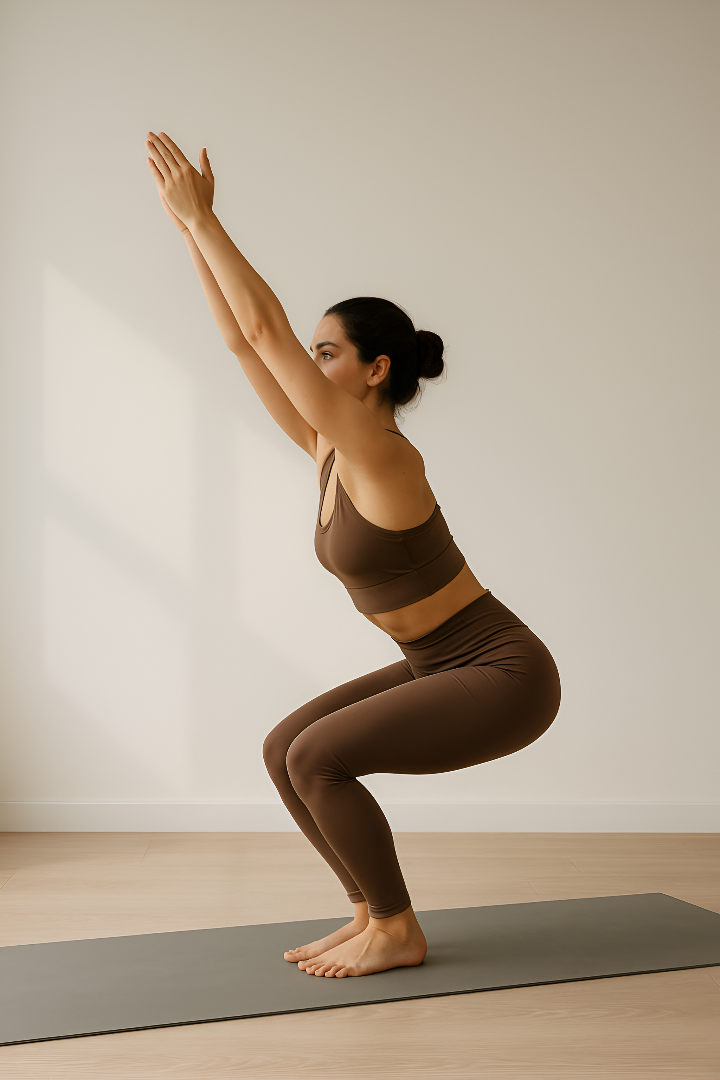
Nauli — Abdominal Churning
Nauli is an advanced Shatkarma technique involving the isolation and churning of the rectus abdominis muscles. This creates a powerful massage of the internal abdominal organs, stimulating digestion, elimination, and the flow of prana. Nauli requires significant control over the abdominal muscles and must be learned under the supervision of a qualified teacher.
Quick Overview
Nauli involves the conscious isolation and rotational churning of the rectus abdominis muscles. It is preceded by Uddiyana Bandha (abdominal lock), in which the abdominal wall is drawn inward and upward after a full exhalation. From this position, the practitioner isolates the central abdominal muscles and rotates them from side to side.
What Is Nauli?
Nauli is derived from the Sanskrit word Nala, meaning tubular vessel or fibre. The technique involves three stages: Madhyama Nauli (central isolation), Vama Nauli (isolation to the left side), and Dakshina Nauli (isolation to the right side). Once the practitioner can isolate each side independently, they combine them into a continuous churning motion. Nauli is considered one of the most effective Shatkarma techniques for digestive health and is a prerequisite for advanced Pranayama involving bandhas.
Purpose of Nauli
The primary purpose of Nauli is to massage and stimulate the internal abdominal organs — the stomach, liver, pancreas, spleen, kidneys, and intestines. This mechanical massage improves blood circulation to these organs, enhances digestive function, stimulates peristalsis, and helps release trapped gases. On an energetic level, Nauli activates the manipura (solar plexus) chakra and prepares the practitioner for the three bandhas.
Benefits of Nauli
Massages Internal Organs
The churning action provides a deep therapeutic massage to the stomach, liver, pancreas, spleen, kidneys, and intestines.
Improves Digestion
Stimulates digestive fire (agni), enhances peristalsis, and relieves constipation, bloating, and indigestion.
Strengthens the Core
Develops exceptional control and strength in the deep and superficial abdominal muscles.
Stimulates Detoxification
Improves blood circulation and lymphatic drainage in the abdominal region, supporting natural detoxification.
Balances the Nervous System
The conscious control of abdominal muscles and breath regulation helps balance the autonomic nervous system.
Prepares for Bandhas
Nauli is an essential prerequisite for mastering Uddiyana Bandha and the other energy locks.
Reduces Belly Fat
Regular practice strengthens and tones the abdominal muscles, contributing to a firmer midsection.
Regulates Appetite
By toning the digestive organs and balancing agni, Nauli helps regulate appetite and food cravings.
Preparation for Nauli
- 1
Learn Uddiyana Bandha (abdominal lock) first — this is the foundation of Nauli.
- 2
Practise on a completely empty stomach — wait at least 5 to 6 hours after a meal.
- 3
Empty your bowels and bladder before practice.
- 4
Stand with your feet hip-width apart, knees slightly bent, hands on your thighs.
- 5
Exhale completely, then perform Uddiyana Bandha by drawing the abdomen inward and upward.
Step-by-Step Practice
Master Uddiyana Bandha
Stand with feet apart, knees bent. Exhale fully, then perform a false inhalation by expanding the rib cage without letting air in. Draw the abdomen inward and upward.
Isolate the Central Muscles
From Uddiyana Bandha, contract the central fibres of the rectus abdominis to create a vertical ridge in the middle of the abdomen. This is Madhyama Nauli.
Isolate to the Left Side
Shift the abdominal isolation to the left side by pressing down on your left thigh with your left hand. This is Vama Nauli.
Isolate to the Right Side
Shift the isolation to the right side by pressing down on your right thigh with your right hand. This is Dakshina Nauli.
Combine into Churning
Once you can isolate each side independently, combine them into a continuous churning motion: left to right and right to left.
Release and Breathe
After 3 to 5 rotations, release the contraction, stand upright, and breathe deeply. Rest for 30 seconds between rounds.
Repeat for 3 to 5 Rounds
Practise 3 to 5 rounds of 5 to 10 churning rotations each, with adequate rest between rounds.
Duration of Practice
A complete Nauli practice takes 10 to 20 minutes. Beginners should practise only 2 to 3 rounds of 3 to 5 rotations each. With consistent practice, build up to 5 rounds of 10 rotations. Nauli is typically practised 3 to 5 times per week.
Best Time to Practice
Early morning on a completely empty stomach before any food or drink. A fully empty stomach allows maximum abdominal contraction. Nauli can also be practised before lunch if you have not eaten for at least 5 hours.
Environment for Practice
Practise in a clean, well-ventilated space with enough room to stand and stretch. A non-slip floor surface is recommended. Wear loose, comfortable clothing. Practise in front of a mirror initially to check your form.
Breathing Guidance
Nauli is performed during a breath hold after full exhalation (bahya kumbhaka). All movement happens while the breath is held out. When you need to breathe, release the contraction, stand upright, and inhale slowly. Never hold the breath to the point of discomfort.
Common Mistakes
Attempting Without Uddiyana Bandha First
Nauli cannot be performed without first mastering Uddiyana Bandha.
Practising on a Full Stomach
The abdomen must be completely empty. Even a small amount of food prevents proper contraction.
Holding the Breath Too Long
Breath should be held only as long as comfortable. Pushing beyond your capacity can cause dizziness.
Using Shoulders to Compensate
The movement should come from the abdominal muscles, not the shoulders or upper body.
Rushing the Progression
Master each stage before attempting the full churning motion.
Safety Precautions
Learn from a Qualified Teacher
Nauli requires expert guidance, especially for correct abdominal isolation and safe breath retention.
Master Uddiyana Bandha First
Do not attempt Nauli until you can comfortably hold Uddiyana Bandha for at least 10 to 15 seconds.
Empty Stomach Mandatory
Wait at least 5 to 6 hours after a full meal. A full stomach during Nauli can cause nausea or injury.
Stop If Dizzy or Nauseous
Dizziness indicates either breath held too long or incorrect technique. Rest and try with shorter holds.
Avoid During Menstruation
Strong abdominal contractions are not recommended during menstruation.
Avoid During Pregnancy
Nauli is contraindicated during pregnancy and the postpartum recovery period.
Consult for Medical Conditions
Those with hernia, recent abdominal surgery, high blood pressure, or heart conditions should consult a doctor.
Who Should Avoid Nauli
Beginners Without Core Preparation
Master Uddiyana Bandha and basic abdominal control before attempting Nauli.
Pregnant Women
Nauli is strictly contraindicated during pregnancy and for at least 6 months postpartum.
Hernia Sufferers
The intra-abdominal pressure created during Nauli can worsen existing hernias.
Post-Abdominal Surgery
Avoid for at least 12 months after any abdominal surgery.
High Blood Pressure or Heart Disease
Breath holding and abdominal pressure can stress the cardiovascular system.
Menstruating Women
Avoid during menstruation. Strong abdominal contractions can increase discomfort.
Beginner Tips
- 1
Learn from a qualified teacher — Nauli is a complex technique that requires in-person instruction.
- 2
Master Uddiyana Bandha completely before progressing to Nauli.
- 3
Practise in front of a mirror to visually confirm your muscle isolation.
- 4
Start with Madhyama Nauli (central isolation) before attempting side isolations.
- 5
Be patient. It can take 1 to 3 months of consistent practice to successfully isolate the abdominal muscles.
- 6
Practise on an empty stomach first thing in the morning.
Advanced Notes
Advanced practitioners explore faster churning speeds, longer durations of continuous churning, and combining Nauli with Mula Bandha and Jalandhara Bandha for a full bandha practice. Some practitioners also practise Nauli in seated postures. In traditional Hatha Yoga, Nauli is considered one of the most powerful techniques for awakening the digestive fire.
Related Practices
Related Categories
Frequently Asked Questions
इस विषय पर और जानें
इसे अन्य अभ्यासों के साथ जोड़ें
महत्वपूर्ण विषयों पर वापस जाएं
Ready to Deepen Your Shatkarma Practice?
Learn these techniques with personalised guidance from Gayatri. A one-on-one session can transform your practice.