Eka Pada Rajakapotasana — One-Legged King Pigeon
Eka Pada Rajakapotasana is an advanced asana that combines a deep hip-opening front leg with a backbend where the back foot reaches toward the head. This complex pose demands exceptional hip flexibility, spinal mobility, and shoulder openness, making it one of the most challenging backbends in yoga.
Quick Overview
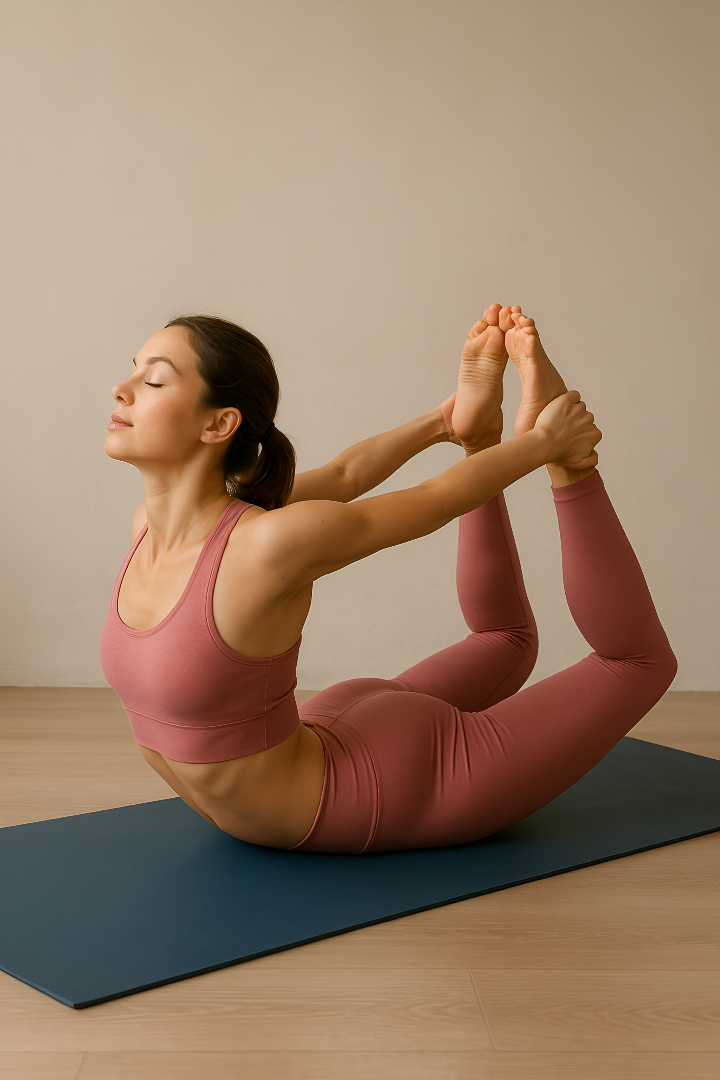
Eka Pada Rajakapotasana is one of the most visually striking and physically demanding poses in yoga. The name translates to 'one-legged king pigeon' — eka meaning one, pada meaning foot, raja meaning king, kapota meaning pigeon. The front leg is bent in deep external rotation (hip opener), while the back leg is also bent with the foot reaching toward the head (backbend). The practitioner reaches back to clasp the foot and draws it toward the crown of the head. This pose requires exceptional flexibility in the hips, spine, shoulders, and quadriceps simultaneously.
Benefits of Eka Pada Rajakapotasana
Deep Hip Opening
The front leg position provides an intense stretch to the external rotators of the hip, the glutes, and the piriformis.
Full Spinal Extension
The backward arch of the upper body takes the spine through deep extension, particularly in the thoracic and lumbar regions.
Quadriceps & Hip Flexor Stretch
The bent back knee and backward reach stretch the quadriceps and hip flexors of the back leg to their maximum range.
Shoulder & Chest Opening
The backward reach of the arms opens the anterior shoulders and pectoral muscles deeply.
Develops Patience & Body Awareness
This advanced pose requires years of consistent practice and teaches profound respect for the body's current limits.
Body Focus
Deep stretch in the glutes and piriformis of the front bent leg
Full extension through the thoracic and lumbar regions
Intense stretch in the back leg quadriceps
Maximum opening as the arms reach back toward the foot
Deep stretch through the psoas of the back extended leg
Who Should Practice Eka Pada Rajakapotasana
Advanced Yoga Practitioners
This pose requires significant flexibility in the hips, spine, and shoulders developed through years of consistent practice.
Those with Open Hips & Strong Backs
Prerequisite flexibility includes comfortable practice of Kapotasana and advanced hip openers.
Practitioners of Heart-Opening Poses
Those seeking the deepest expressions of chest and shoulder opening will find this pose transformative.
Students of Advanced Asana
Those systematically working through advanced backbend progressions will find this a natural peak pose.
Who Should Avoid Eka Pada Rajakapotasana
Both the front bent knee and the back bent knee are under significant stress in this pose. Knee conditions can be severely aggravated.
The extreme external rotation of the front hip may aggravate hip pathologies. Avoid or practice only under skilled guidance.
The combination of asymmetrical hip opening and deep backbending can stress the SI joint and lumbar spine significantly.
Preparation Tips
Warm up extensively with a full backbend sequence — Bhujangasana, Salabhasana, Dhanurasana, Ustrasana, and Kapotasana
Practice the hip-opening component (pigeon) separately before adding the backbend element
Use a yoga strap over the back foot if you cannot reach it with your hands — this allows you to experience the shape safely
Keep the front hip grounded and level — avoid lifting the front hip as you reach back
Step-by-Step Instructions
Begin in Downward Facing Dog
From Adho Mukha Svanasana, bring the right knee forward between the hands and lower it to the floor outside the right wrist.
Set up the front leg
Lower the right shin to the floor at a comfortable angle — closer to parallel for more intensity, closer to the hip for less. Extend the left leg straight back.
Square the hips
Press the right hip down toward the floor and extend the left hip forward. Both hips should face forward as much as possible.
Bend the back knee
Bend the left knee and bring the left foot toward the glutes. Reach back with the left hand to clasp the left foot.
Reach back with the right hand
Reach the right arm overhead and back to also clasp the left foot. Keep the chest lifting throughout.
Draw the foot toward the head
Press the left foot into the hands and gently draw it toward the crown of the head. Keep the chest lifted and the front hip grounded.
Hold and breathe
Stay for 3–5 breaths. To release, gently release the foot, straighten the back leg, and transition out of the pose. Repeat on the other side.
Breathing Guidance
The intensity of Eka Pada Rajakapotasana makes steady breathing both challenging and essential. The deep hip opening and spinal extension can trigger a fear response that shortens the breath. Consciously lengthen each inhale and exhale, using the breath as an anchor. Inhale to lift the chest and create space. Exhale to soften into the hip and reach the foot closer. If the breath becomes ragged or stops, ease back immediately — the breath is your guide to safe depth.
Common Mistakes
Lifting the front hip off the floor
Correction: Keep the front hip grounded and level. Lifting reduces the hip-opening benefit and destabilizes the pose.
Twisting the torso to reach the foot
Correction: Keep the chest facing forward as much as possible. Reaching back with a twist strains the spine.
Forcing the foot to the head
Correction: The foot should approach the head gradually as flexibility improves. Forcing the grip can strain the shoulder, neck, or quadriceps.
Neglecting the front leg alignment
Correction: The front shin angle determines the hip-opening intensity. Keep it at a safe angle — never force the shin parallel if the hip is not ready.
Safety Precautions
Eka Pada Rajakapotasana requires extensive warm-up of the hips, spine, and shoulders. Never attempt this pose cold or without preparatory backbends.
A yoga strap around the back foot allows you to experience the pose shape safely without forcing the shoulder or arm position.
If the front knee feels any sharp pain, adjust the angle of the shin or come out of the pose. The knee should never bear weight in a painful position.
Variations & Modifications
Supported King Pigeon
IntermediatePlace a folded blanket under the front hip and a block under the hands for support while working toward the full expression.
Pigeon with a Strap
IntermediateLoop a yoga strap over the back foot and hold the strap with both hands overhead to work toward the full bind safely.
Kapotasana (Pigeon Pose)
IntermediateThe preparatory version without the back foot catch — focus on the hip-opening and gentle backbend before attempting the full bind.
Related Asanas
Explore Related Categories
Frequently Asked Questions
इस विषय पर और जानें
इसे अन्य अभ्यासों के साथ जोड़ें
महत्वपूर्ण विषयों पर वापस जाएं
Master One-Legged King Pigeon Pose with Personal Guidance
Your first class is free. Talk to Gayatri and get personalized alignment cues for your practice.